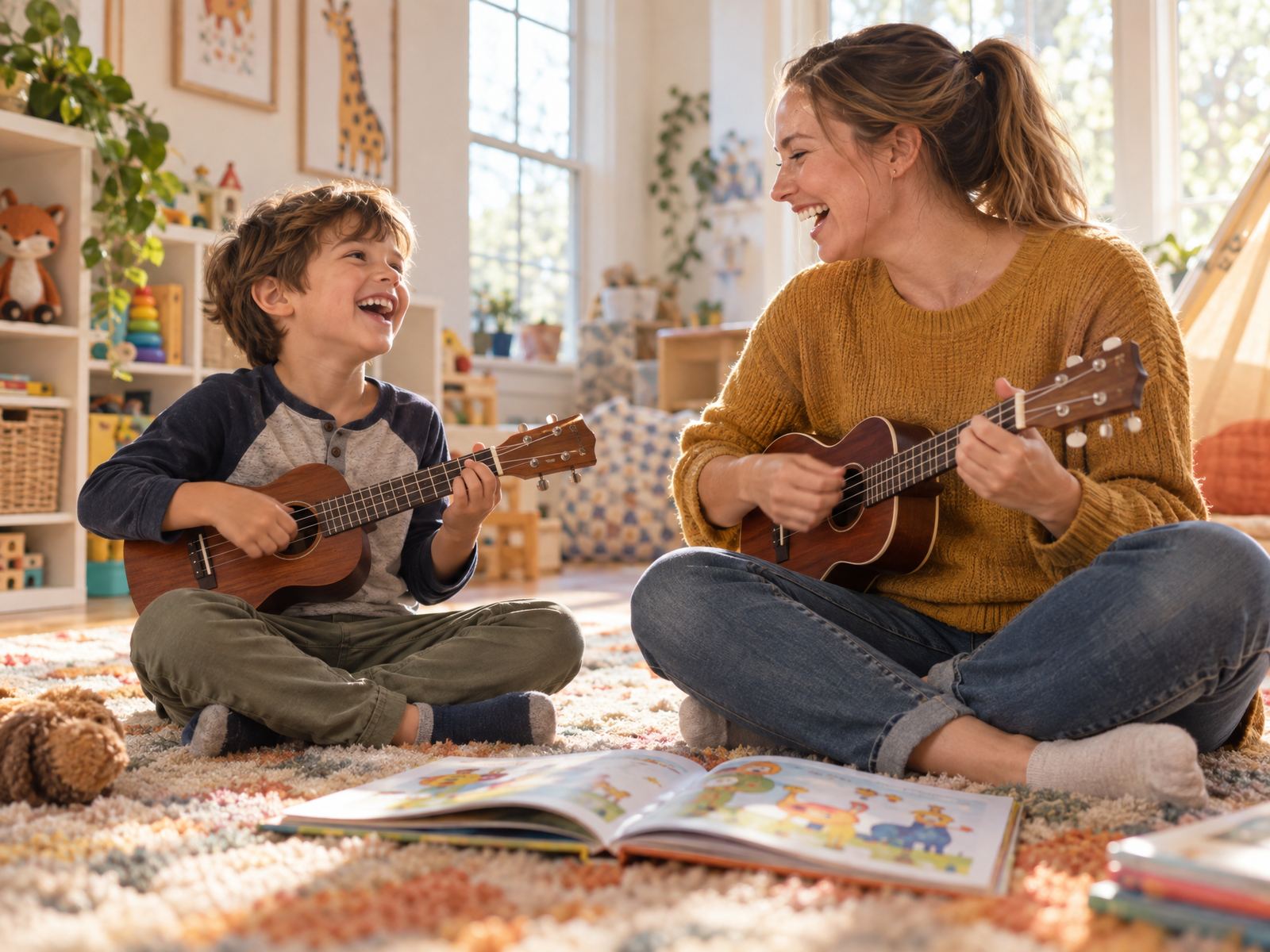
There's no single right age, but there is a right age for each instrument, and readiness matters more than birthdays. Here's what experienced teachers look for, instrument by instrument.
Signs your child is ready
- They can focus on one activity for about 20 to 30 minutes.
- They know their letters and numbers (it helps with early reading).
- They're curious: they pick out tunes, drum on tables, or ask about an instrument.
- Their hands are big enough for the instrument (your teacher can check this at the first lesson).
Typical starting ages
| Instrument | Typical start | Why |
|---|---|---|
| Piano | 5 and up | No tuning or hand-size barrier; builds reading and theory that transfers to every instrument. |
| Violin | 5 and up | Small, fractional-size violins fit young players; many teachers start ear-first. |
| Ukulele | 5 and up | Four soft nylon strings and a small neck; a great path into guitar later. |
| Guitar | 6–7 and up | Fingers need a little strength to press strings; smaller guitars help. |
| Drums | 6 and up | Coordination and steady time can start early on a practice pad. |
| Cello | 6 and up | Fractional cellos fit younger students. |
| Voice | 7 and up | Young voices need gentle, healthy technique; serious training comes later. |
| Flute, clarinet, sax | 8–9 and up | Air support, hand reach and adult front teeth matter; many start with school band. |
| Trumpet, trombone | 9–10 and up | Embouchure and arm reach (for trombone slide positions). |
| Music production | 11 and up | Needs comfort on a computer and patience for longer projects. |
What about very young kids?
Children under 5 usually do best with playful, group-based music classes: singing, moving, rhythm games. Private lessons can start when they're ready to sit and focus for half an hour. If you're unsure, start with 30 minutes and an instrument with a gentle learning curve, like piano or ukulele.
And teens and adults?
It's never too late, and older beginners often progress faster because they understand practice and know the music they love. Teens can start any instrument; many arrive with a specific goal like a band, an audition or a song. Adults learn differently from kids, not worse. See lessons for teens and lessons for adults.
How to give a young beginner the best start
- Keep lessons short. 30 minutes is plenty for most kids under 9.
- Practice little and often. Ten to fifteen minutes most days beats one long session a week.
- Choose the right teacher. Someone who's great with children, not just a great player.
- Make it theirs. Songs they know and love keep motivation high.
Common questions
Should my child start on piano before another instrument?
It's a great foundation but not a requirement. Piano teaches reading and theory clearly, but a child who is excited about guitar or drums will often practice more on the instrument they love.
Is 4 too young for music lessons?
For most 4-year-olds, group music classes are a better fit. Some focused 4-year-olds do well with short piano or violin lessons. A teacher can tell you after one lesson.
My child wants to quit after a few months. What should we do?
Talk to the teacher first. Often the music or the pace needs to change. A different teacher or instrument can turn things around; a good program will rematch you at no charge.