1. Home
  2. Lessons
  3. Bass
Bass lessons · Metro Atlanta

The bass player is why the band feels good.

Electric for funk, rock and the church band; upright for jazz and orchestra. Lessons happen at home, at your teacher's studio, or online, and timing and feel get as much attention as the notes.

Ages 9 and up Home, studio or online Background-checked teachers
A teacher welcoming a student into her home studio
Who it's for

Bass lessons for every age.

Kids

Bass suits kids around 9 and older whose hands can reach across the neck, and a short-scale bass makes that much easier. Young players learn root notes, simple grooves and how to listen to the drums, and they sound like part of the band surprisingly fast.

Lessons for kids

Teens

Garage bands, jazz bands and worship teams all need a bass player, and a teen who can hold down the groove gets asked to play. Lessons cover riffs from the songs they love, reading bass clef and chord charts, fingerstyle and slap, and for orchestra students, upright technique plus honor orchestra and GMEA All-State audition prep.

Lessons for teens

Adults

Guitarists switching over, listeners who always heard the bass line first, and players who want to join a church or community band. Your teacher builds the fundamentals that make a bassist easy to play with: steady time, good tone and knowing where the chord is going next.

Lessons for adults
What you'll learn

A clear path, at your pace.

Every student gets goals and a weekly practice plan. Here's roughly how bass lessons progress. Your teacher adjusts it to you.

Level 1

Getting started

  • Plucking-hand technique: fingerstyle and pick
  • Root notes, octaves and simple grooves
  • Locking in with a drum beat or metronome
  • Reading tab, chord charts and the basics of bass clef
Level 2

Building up

  • Major and minor scales and arpeggios across the neck
  • Walking bass lines and the 12-bar blues
  • Slap, muting and ghost notes
  • Learning songs by ear and building your own parts
Level 3

Advanced & pro

  • Upright: bowing, intonation and orchestral excerpts
  • Walking over jazz standards and taking a solo
  • Sight-reading charts for gigs and sessions
  • Audition repertoire and prep for pit, church and session work

Styles we teach

FunkR&B & soulGospelRockJazzMotownHip-hop & neo-soulPopCountryReggaeLatinClassical (upright)
Your first lesson

What to expect.

Your teacher tunes up with you, asks what music made you want to play bass, and gets you playing a groove against a drum beat right away. You'll leave with a bass line you can actually play, a short practice routine, and an honest sense of where your timing sits today.

What you need

Electric bass needs the bass, a small practice amp and a cable; a short-scale bass is a great fit for kids and smaller hands. Upright bass comes in fractional sizes, and renting one from a string shop is the usual first step. Your teacher can check your setup at the first lesson, and you don't need to buy anything before talking to us.

Love your first lesson, or your money back.

If the first lesson with your teacher isn't a great fit, tell us within 48 hours. We'll rematch you with a different teacher at no charge, or refund everything you've paid. Your choice. Your teacher still gets paid for their time; we cover it. That's how sure we are about who we send you.

Every bass teacher on our roster

  • Plays and teaches professionallyA working musician with real teaching experience.
  • Auditioned by Alex + an observed demo lessonWe see them teach before they teach you.
  • Background-checkedCriminal and sex-offender registry checks before a first lesson.
Three ways to learn

Your place, theirs, or online.

Pick what fits your week. You can change it any time, and many families mix all three.

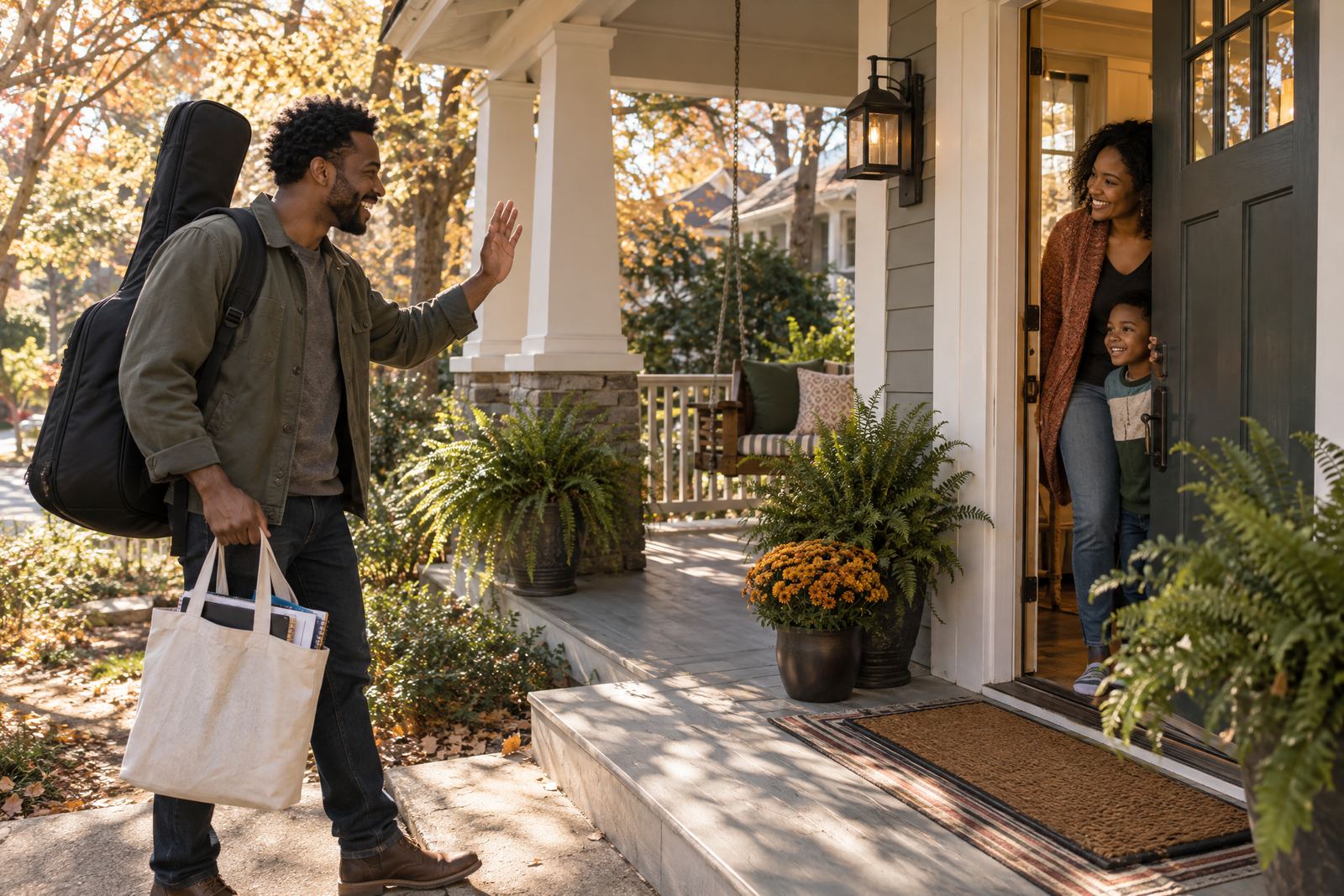
Music teacher arriving at a family's front door with a guitar case
Most popular

In your home

Your teacher comes to you, same day and time each week. No drive, no waiting room, no car-line shuffle. Kids learn on the instrument they actually practice on.

  • Perimeter, North Fulton & East Cobb now; Intown opening
  • A parent or guardian home for students under 18
  • From $55 per 30-minute lesson
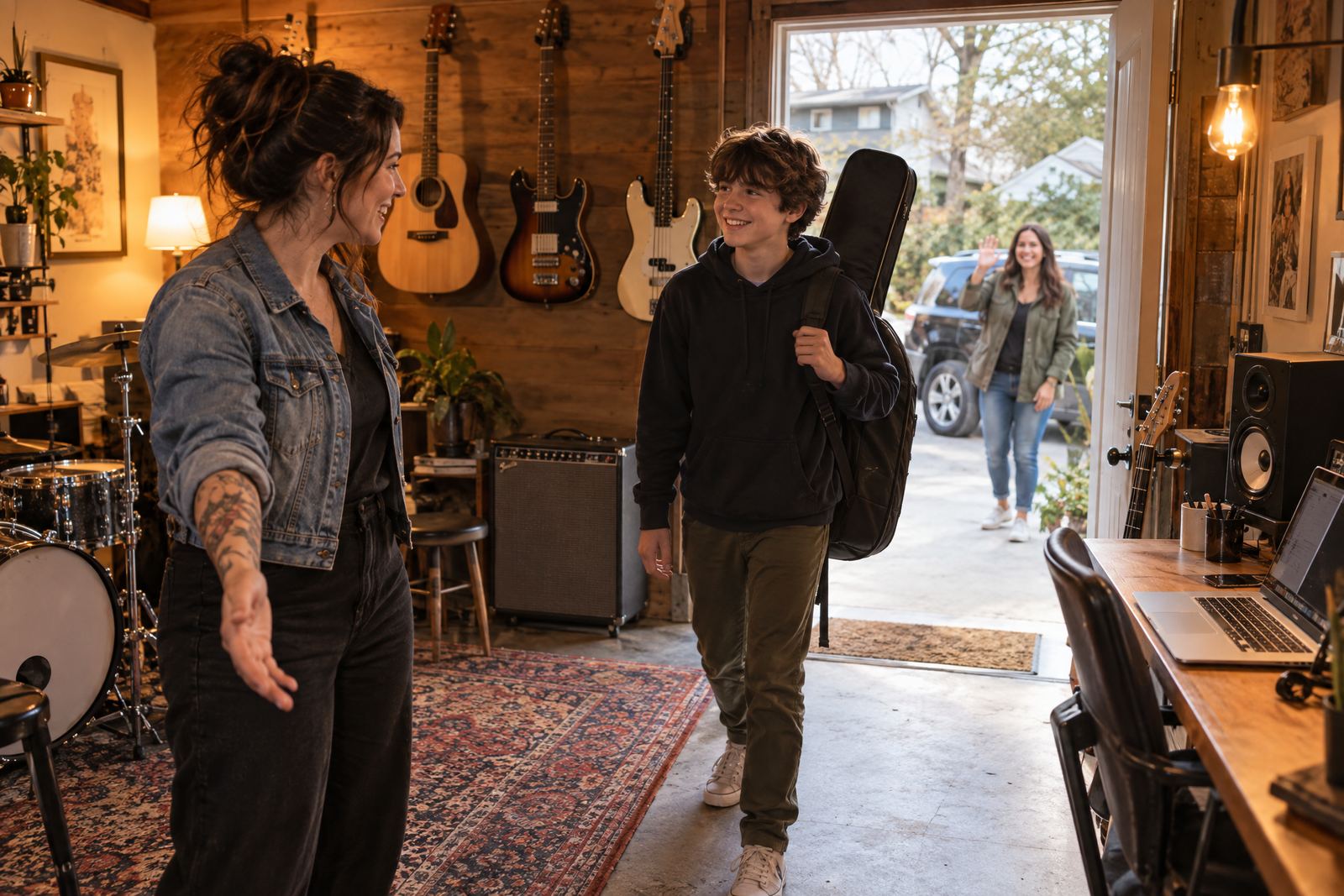
Student arriving at a teacher's home recording studio
Great value

At your teacher's studio

Learn in a real working musician's space: their instruments, their recording setup, a room built for music. A great fit for drums, advanced players and anyone who likes a change of scene.

  • Teacher studios across the metro, ITP and OTP
  • Pro gear and recording tools on hand
  • From $50 per 30-minute lesson
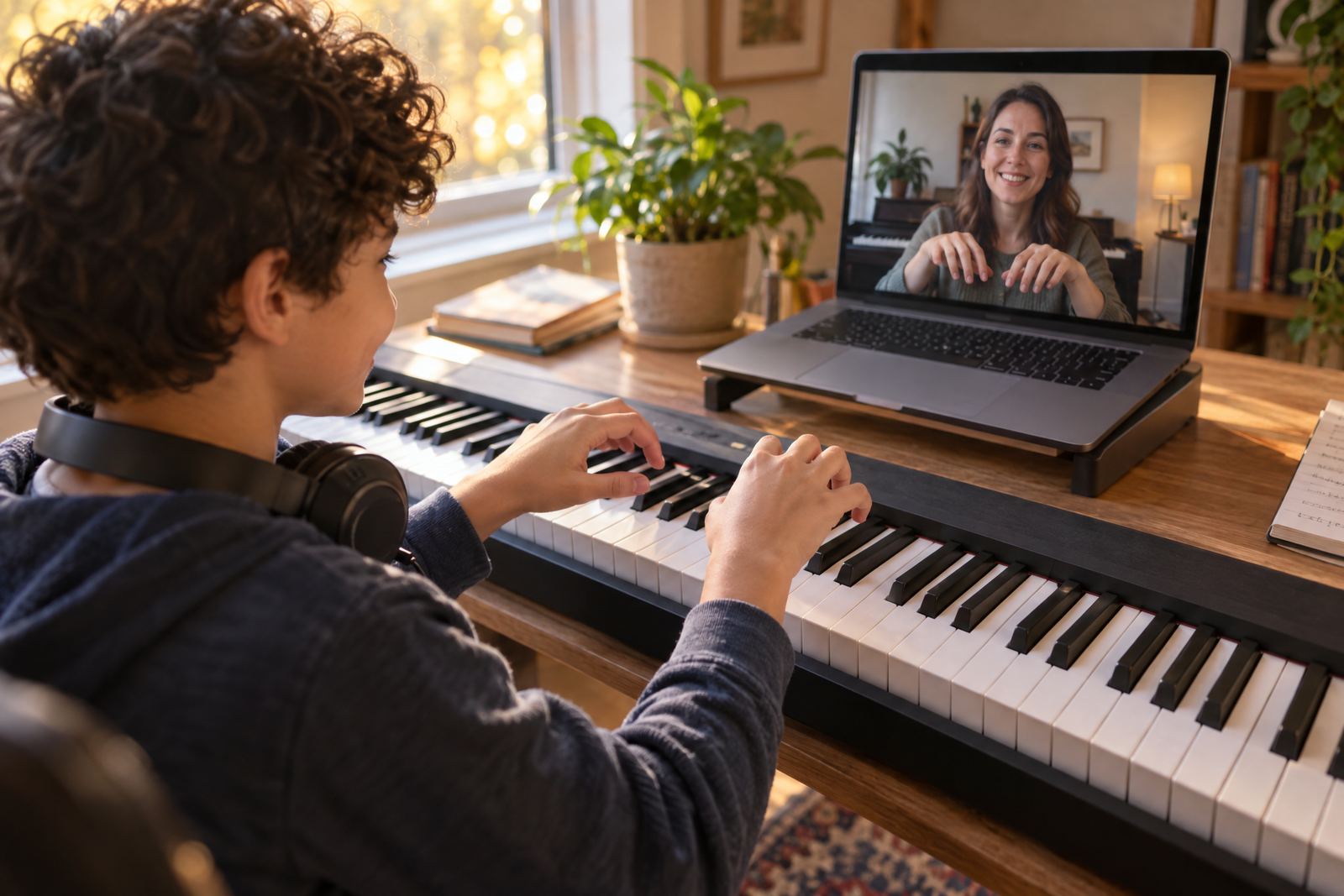
Boy taking a live online piano lesson on a laptop
Anywhere

Online, live

The same teacher, live on video. Perfect for busy weeks, travel, sick days and families outside our in-home area. Many students mix online with in-person.

  • Live one-on-one, never pre-recorded
  • Switch between online and in-person
  • From $45 per 30-minute lesson
Questions

Bass lesson questions.

Pairs well with

Should I learn electric or upright bass?

Start where the music you love lives. Electric bass covers rock, funk, R&B, gospel and pop; upright is the sound of jazz, bluegrass and the orchestra. Many players learn one and add the other later, and the musical knowledge carries over.

Do I need to play guitar before learning bass?

No. Bass is its own instrument with its own job, and plenty of bassists never played guitar. If you do play, you'll have a head start on the fretboard, but you'll still need to learn to think in grooves and roots instead of chords and melodies.

What size bass does my child need?

Most kids do well on a short-scale electric bass, which has a shorter neck and frets closer together. For upright, fractional sizes like 1/4 and 1/2 are common for younger players. Your teacher will help fit your child before you rent or buy.

Can lessons help with school orchestra or jazz band?

Yes. Orchestra bassists need bowing, bass clef reading and good intonation; jazz band bassists need walking lines and chord-chart reading. Tell us which your student plays and we'll match them with a teacher who covers that side of the instrument, including honor orchestra and All-State audition prep.

I play in my church band. Can lessons help me get tighter?

Definitely. Church bass is a great school for feel, dynamics and following a leader who changes things on the fly. Your teacher can work on transitions, reading Nashville number charts, playing to a click in your in-ears, and keeping the groove solid when the song stretches.

Find your bass teacher.

Tell us who's learning and what they want to play. A coordinator will call within one business day with a teacher in mind.

Find my bass teacher