1. Home
  2. Lessons
  3. Music Theory
Music Theory lessons · Metro Atlanta

When theory clicks, everything you play gets easier.

Theory, ear training and sight-singing for players of any instrument, always connected to music you actually play. Lessons run at home, at your teacher's studio, or online, from first fundamentals to AP Music Theory and college placement exams.

Ages 10 and up Home, studio or online Background-checked teachers
An adult student at the piano with his teacher
Who it's for

Music Theory lessons for every age.

Kids

Students from about 10 learn note reading, rhythm, key signatures and how chords are built, which tends to speed up everything else they play. Lessons use the student's own instrument and pieces, so theory never feels like abstract homework.

Lessons for kids

Teens

High schoolers prepare for the AP Music Theory exam, from part-writing and harmonic analysis to melodic dictation and sight-singing, and music-school applicants get ready for the theory and ear-training placement tests many college programs give. Band, orchestra and choir students also get help with the sight-reading in GMEA auditions.

Lessons for teens

Adults

Adults who play by ear and want to understand what they're doing, church musicians who need to transpose on the spot, and songwriters hungry for more chords. Your teacher explains theory in the language of your instrument and your music, not a textbook's.

Lessons for adults
What you'll learn

A clear path, at your pace.

Every student gets goals and a weekly practice plan. Here's roughly how music theory lessons progress. Your teacher adjusts it to you.

Level 1

Getting started

  • Reading notes in treble and bass clef
  • Rhythm, meter and counting
  • Major and minor scales and key signatures
  • Intervals and building triads
Level 2

Building up

  • Seventh chords and Roman numeral analysis
  • Ear training: intervals, chord qualities and progressions
  • Sight-singing with solfège
  • Cadences, phrases and basic form
Level 3

Advanced & exam prep

  • AP Music Theory prep: part-writing, dictation and sight-singing
  • Four-part voice leading and chromatic harmony
  • Jazz and pop harmony: extensions, substitutions and modes
  • College placement and audition theory exams

Styles we teach

FundamentalsEar trainingSight-singingAP Music TheoryClassical harmonyJazz harmonyPop & songwriting harmonyRhythm & readingForm & analysisCollege placement prep
Your first lesson

What to expect.

Your teacher finds out what you already know with a few quick questions and listening exercises (never a scary test) and asks what you want theory to do for you. You'll learn one thing you can use on your instrument that day and leave with a plan, whether the goal is a May exam date or finally understanding the songs you play.

What you need

A notebook or staff paper, a pencil, and your instrument if you play one. A keyboard or piano app helps for hearing chords. AP students will get pointed toward practice materials and released exam questions. Nothing to buy before you talk to us.

Love your first lesson, or your money back.

If the first lesson with your teacher isn't a great fit, tell us within 48 hours. We'll rematch you with a different teacher at no charge, or refund everything you've paid. Your choice. Your teacher still gets paid for their time; we cover it. That's how sure we are about who we send you.

Every music theory teacher on our roster

  • Plays and teaches professionallyA working musician with real teaching experience.
  • Auditioned by Alex + an observed demo lessonWe see them teach before they teach you.
  • Background-checkedCriminal and sex-offender registry checks before a first lesson.
Three ways to learn

Your place, theirs, or online.

Pick what fits your week. You can change it any time, and many families mix all three.

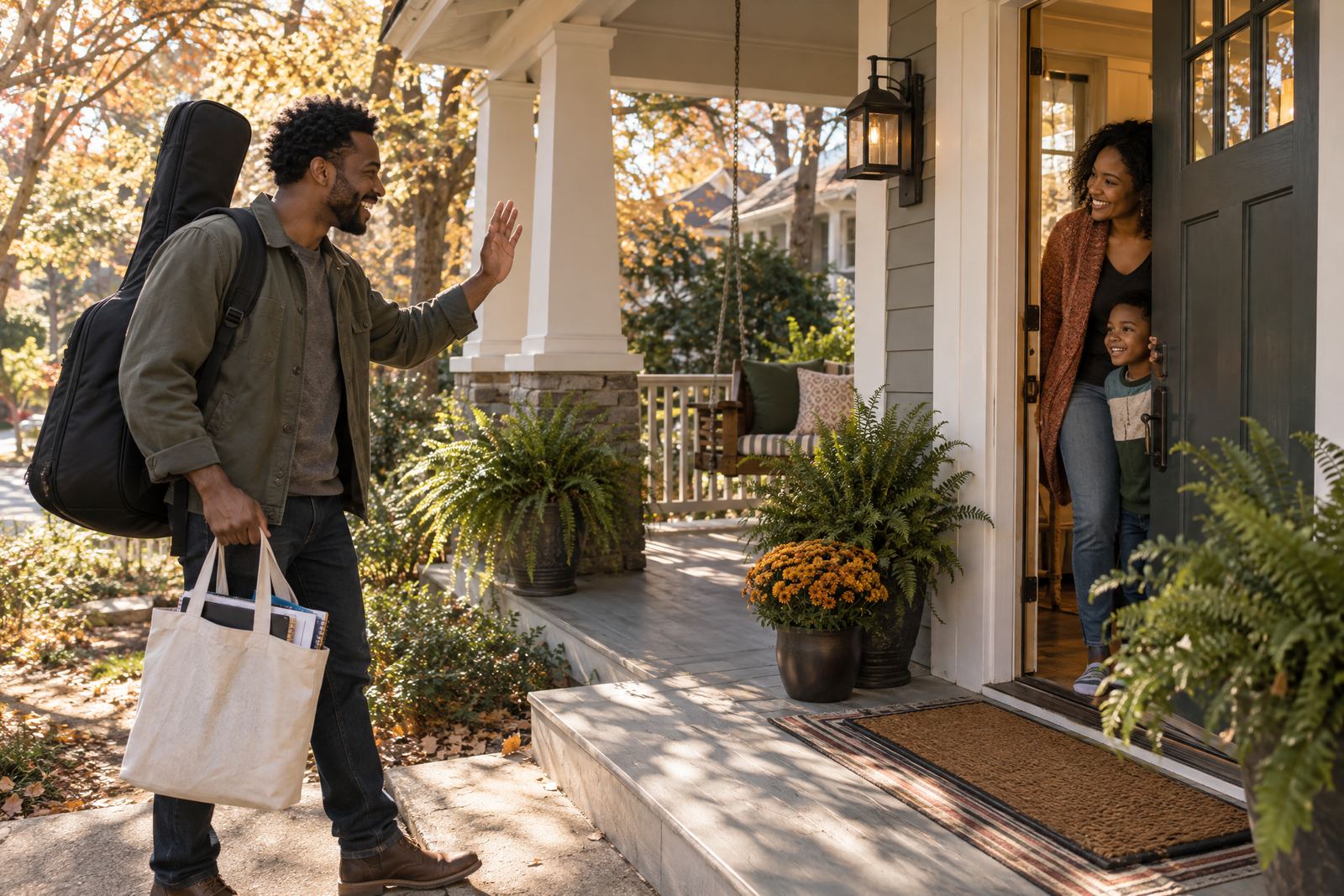
Music teacher arriving at a family's front door with a guitar case
Most popular

In your home

Your teacher comes to you, same day and time each week. No drive, no waiting room, no car-line shuffle. Kids learn on the instrument they actually practice on.

  • Perimeter, North Fulton & East Cobb now; Intown opening
  • A parent or guardian home for students under 18
  • From $55 per 30-minute lesson
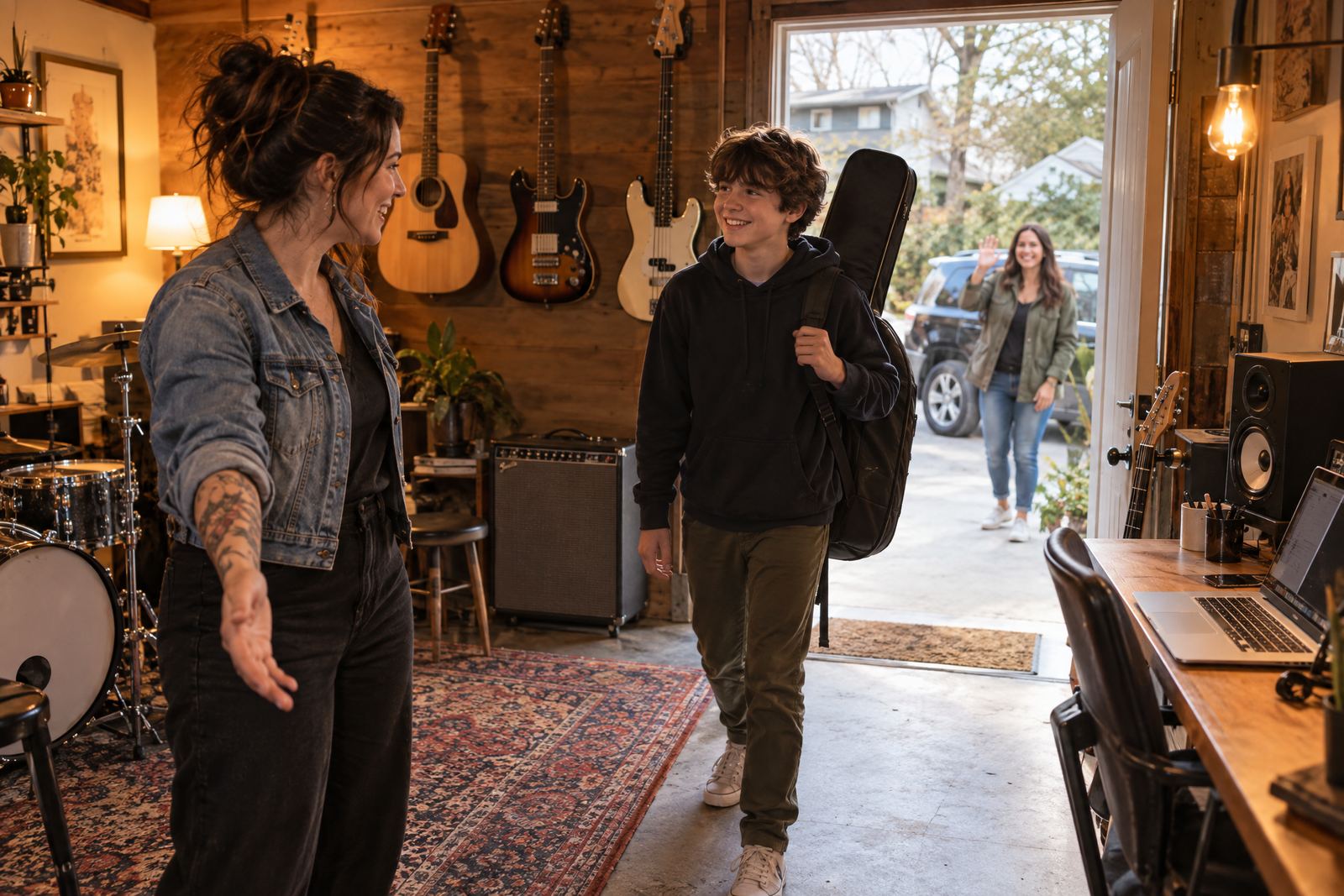
Student arriving at a teacher's home recording studio
Great value

At your teacher's studio

Learn in a real working musician's space: their instruments, their recording setup, a room built for music. A great fit for drums, advanced players and anyone who likes a change of scene.

  • Teacher studios across the metro, ITP and OTP
  • Pro gear and recording tools on hand
  • From $50 per 30-minute lesson
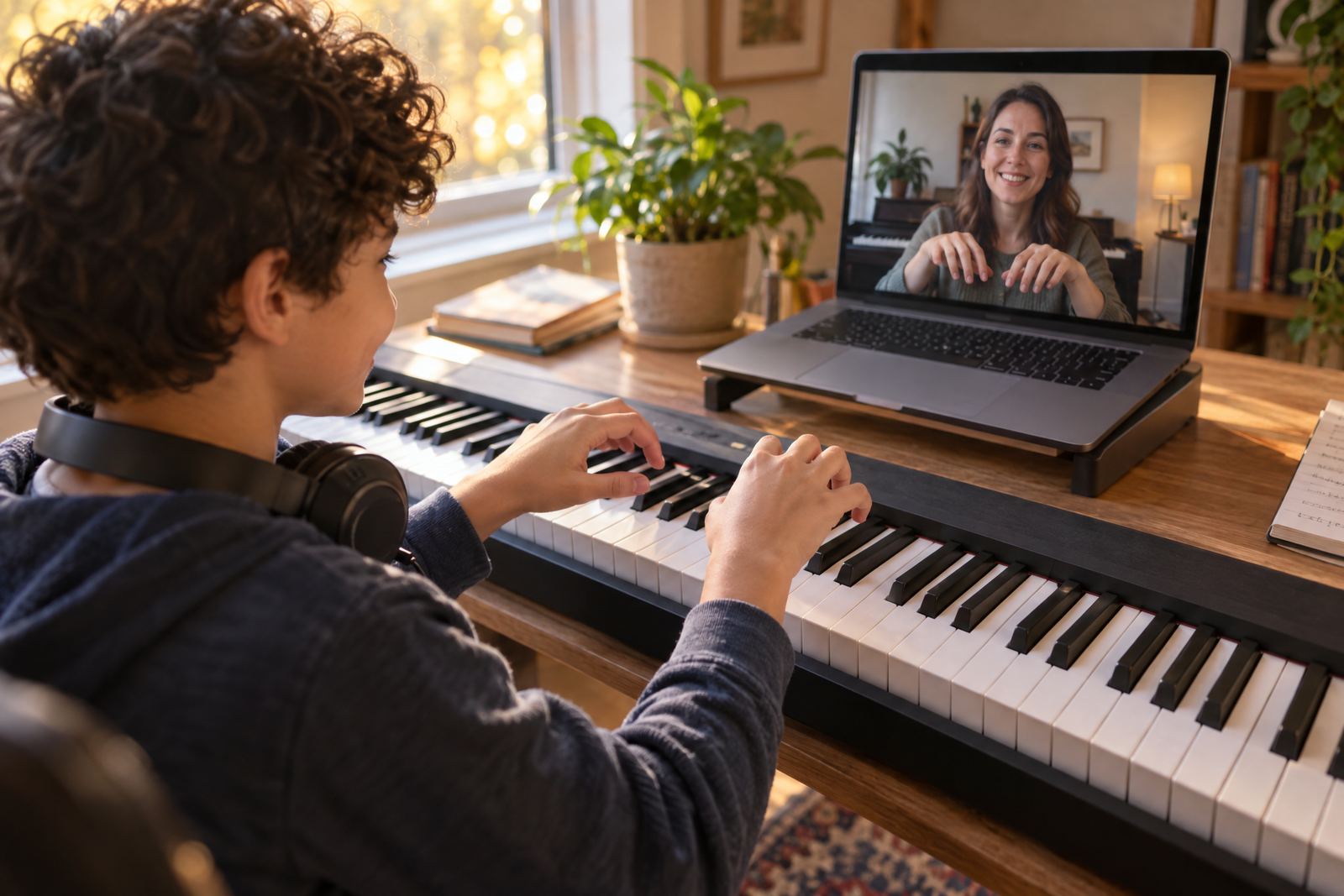
Boy taking a live online piano lesson on a laptop
Anywhere

Online, live

The same teacher, live on video. Perfect for busy weeks, travel, sick days and families outside our in-home area. Many students mix online with in-person.

  • Live one-on-one, never pre-recorded
  • Switch between online and in-person
  • From $45 per 30-minute lesson
Questions

Music Theory lesson questions.

Pairs well with

Can you help my teen prepare for the AP Music Theory exam?

Yes. Your teacher works through the whole exam: written theory, analysis, part-writing, melodic and harmonic dictation, and sight-singing. The listening and singing sections are the hardest to practice alone, so lessons spend real time there. Starting in the fall and taking practice tests in the spring works best.

Do I need to play an instrument to study theory?

No, but most students do, and connecting theory to an instrument makes it stick. Singers, producers and songwriters study theory too. A keyboard of any kind is the most useful tool, because it lays every chord out in front of you.

What is ear training, and can it be learned?

Ear training is learning to recognize intervals, chords, rhythms and melodies by sound. It can absolutely be learned with regular practice. Students usually notice it first when the songs they hear start making sense on their instrument.

My child is auditioning for college music programs. Do they need theory prep?

Very likely. Many music schools give theory and ear-training placement tests around audition time, and placing well can keep a student out of catch-up courses. Your teacher can review fundamentals, keyboard skills and sight-singing so placement day isn't a surprise.

Can theory help me play by ear or improvise?

Yes. Understanding chord functions, scales and common progressions helps you predict where a song is going, which is most of playing by ear. Improvisers use the same knowledge to choose notes on purpose instead of by luck.

Find your music theory teacher.

Tell us who's learning and what they want to play. A coordinator will call within one business day with a teacher in mind.

Find my music theory teacher