1. Home
  2. Lessons
  3. Trumpet
Trumpet lessons · Metro Atlanta

High notes come from air and practice, not pressing harder.

Your teacher builds the daily routine behind real range and endurance, in lessons at your house, at their studio, or online, and ties it to the band, jazz or horn-section music you actually play.

Ages 9 and up Home, studio or online Background-checked teachers
Trumpet
Who it's for

Trumpet lessons for every age.

Kids

Trumpet works best once a child's adult front teeth are in, usually around 9 or when school band begins. Young players learn to buzz, form an embouchure and play their first notes on steady air, and lessons keep mouthpiece pressure light from the start so bad habits never form.

Lessons for kids

Teens

Teen trumpeters get help with range, endurance, lead and section playing in jazz band, and the scales and prepared music for GMEA District Honor Band and All-State. Marching season is hard on chops, so lessons also cover how to warm up, rest and recover.

Lessons for teens

Adults

Returning players often come back after decades and find their range shorter than they remember. That's normal, and a smart, patient routine rebuilds it steadily. Adult beginners learn the same fundamentals, and lessons can head toward community band, a big band or a church horn section.

Lessons for adults
What you'll learn

A clear path, at your pace.

Every student gets goals and a weekly practice plan. Here's roughly how trumpet lessons progress. Your teacher adjusts it to you.

Level 1

Getting started

  • Buzzing, embouchure and mouthpiece placement
  • Breathing and long tones for a steady sound
  • Valve combinations and reading the first octave
  • Tonguing, slurs and simple melodies
Level 2

Building up

  • Lip slurs and flexibility studies
  • Expanding range up through the staff
  • Scales, articulation and Arban studies
  • Section playing and District Honor Band audition prep
Level 3

Advanced & pro

  • Double and triple tonguing
  • Range and endurance for lead playing
  • Jazz improvisation and style
  • Transposition, orchestral excerpts and college auditions

Styles we teach

JazzConcert bandMarching bandOrchestralLatin & salsaFunk & soul hornsBig bandGospelMariachiSkaNew Orleans brass bandPop
Your first lesson

What to expect.

Your teacher starts with the mouthpiece alone, getting a relaxed buzz, then moves to the trumpet for your first notes. Beginners leave with two or three notes and a short daily warm-up. Experienced players run through a few things so the teacher can hear range, tone and endurance, then get a routine aimed at whichever needs the most help.

What you need

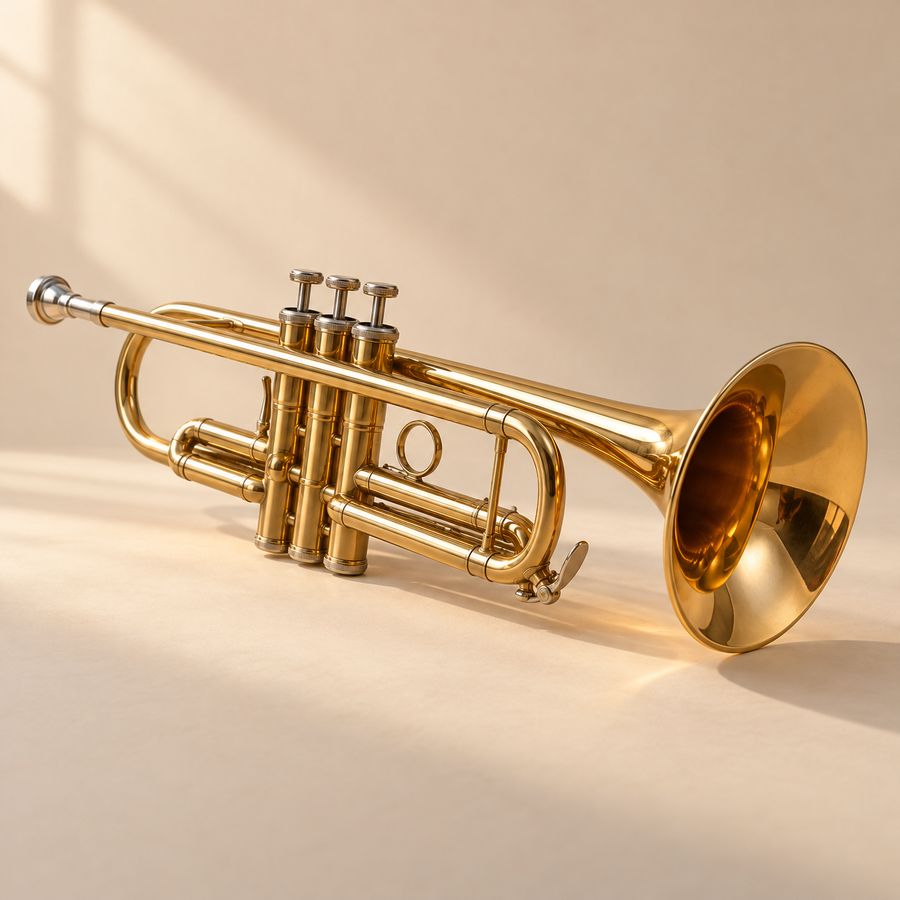
Most students start on a rented or used student B-flat trumpet with a standard 7C mouthpiece, and that setup lasts a long time. You'll need valve oil, slide grease and a cleaning kit. For apartments, a practice mute cuts the volume a lot. Your teacher can check a used horn for sticky valves or leaks, so talk to us before buying.

Love your first lesson, or your money back.

If the first lesson with your teacher isn't a great fit, tell us within 48 hours. We'll rematch you with a different teacher at no charge, or refund everything you've paid. Your choice. Your teacher still gets paid for their time; we cover it. That's how sure we are about who we send you.

Every trumpet teacher on our roster

  • Plays and teaches professionallyA working musician with real teaching experience.
  • Auditioned by Alex + an observed demo lessonWe see them teach before they teach you.
  • Background-checkedCriminal and sex-offender registry checks before a first lesson.
Three ways to learn

Your place, theirs, or online.

Pick what fits your week. You can change it any time, and many families mix all three.

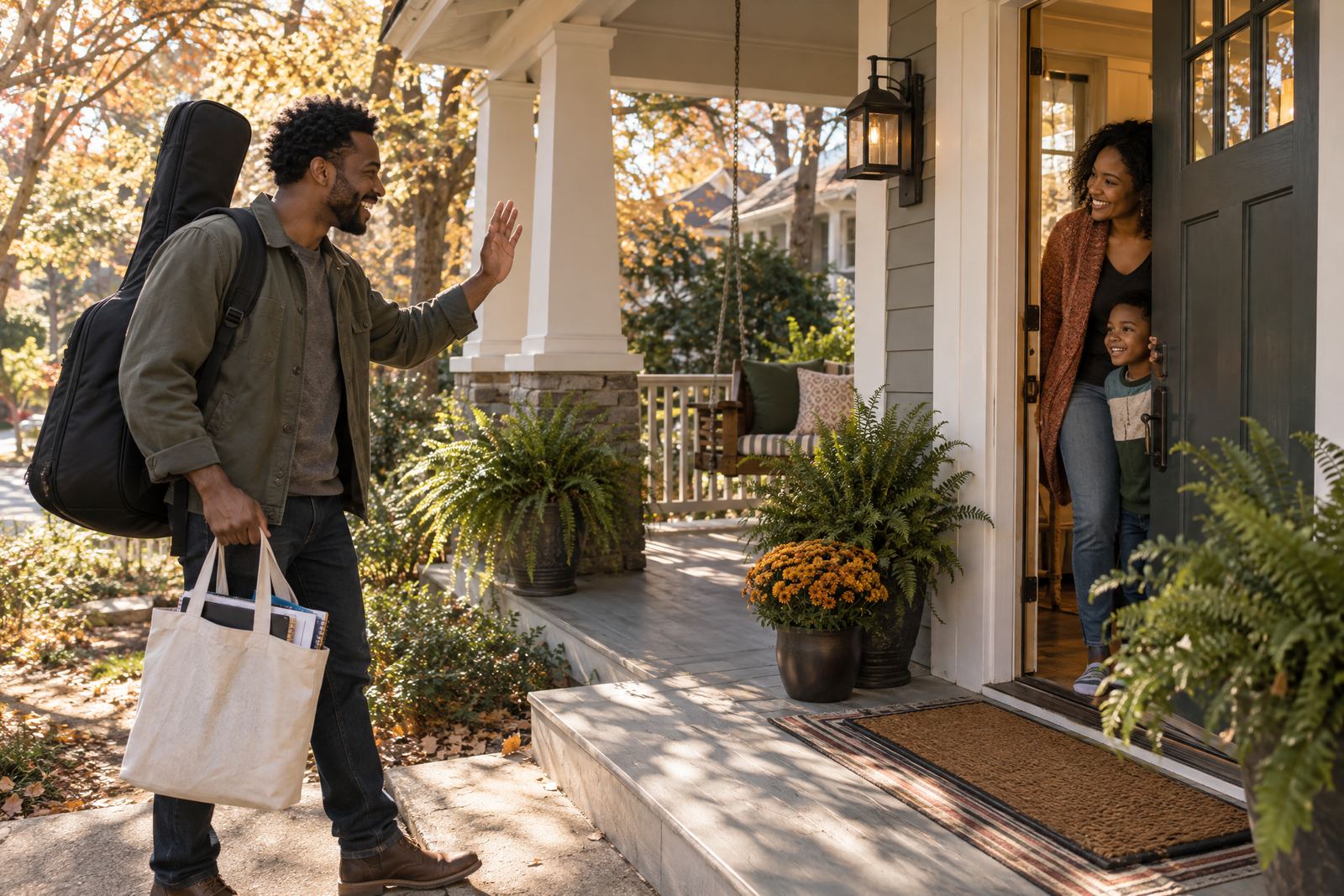
Music teacher arriving at a family's front door with a guitar case
Most popular

In your home

Your teacher comes to you, same day and time each week. No drive, no waiting room, no car-line shuffle. Kids learn on the instrument they actually practice on.

  • Perimeter, North Fulton & East Cobb now; Intown opening
  • A parent or guardian home for students under 18
  • From $55 per 30-minute lesson
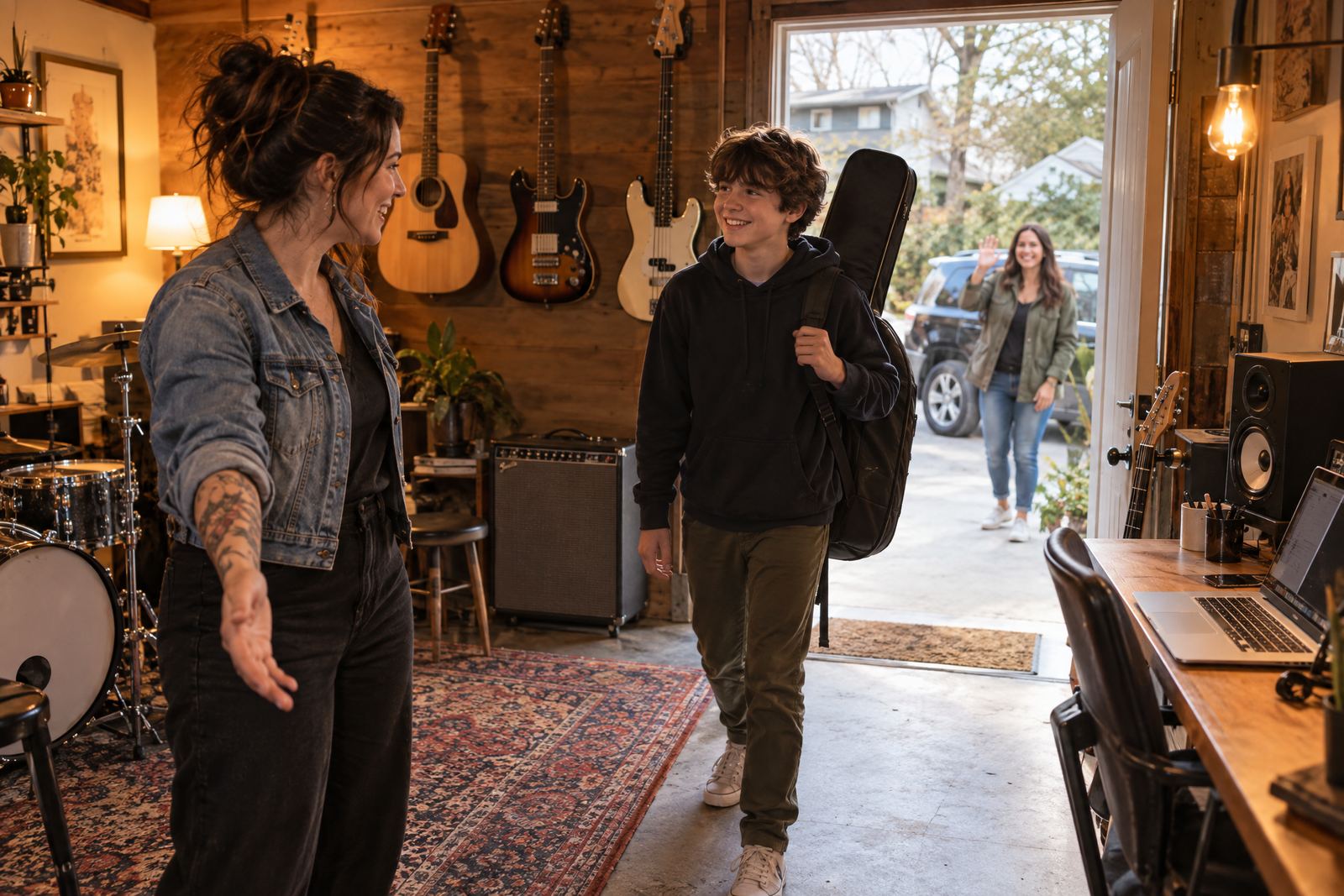
Student arriving at a teacher's home recording studio
Great value

At your teacher's studio

Learn in a real working musician's space: their instruments, their recording setup, a room built for music. A great fit for drums, advanced players and anyone who likes a change of scene.

  • Teacher studios across the metro, ITP and OTP
  • Pro gear and recording tools on hand
  • From $50 per 30-minute lesson
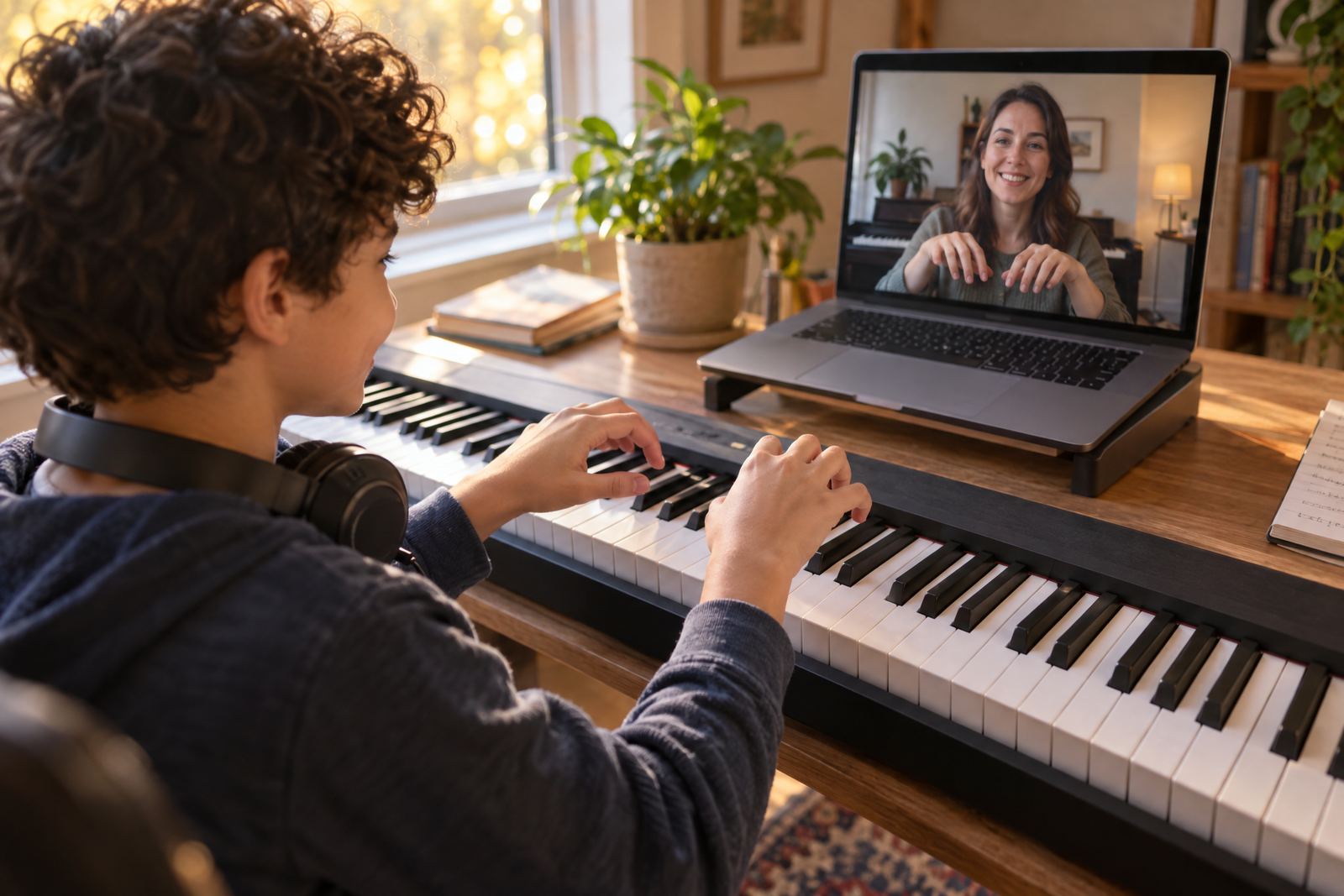
Boy taking a live online piano lesson on a laptop
Anywhere

Online, live

The same teacher, live on video. Perfect for busy weeks, travel, sick days and families outside our in-home area. Many students mix online with in-person.

  • Live one-on-one, never pre-recorded
  • Switch between online and in-person
  • From $45 per 30-minute lesson
Questions

Trumpet lesson questions.

Pairs well with

How young can my child start trumpet?

Most brass teachers prefer to wait until the adult front teeth are in, usually somewhere between 8 and 10. The embouchure relies on the teeth for support, and starting earlier tends to be frustrating. If your child is eager now, piano lessons are a great way to build reading and rhythm in the meantime.

My child just got braces. Can they keep playing?

Yes, though the first few weeks can be uncomfortable. Brace guards or orthodontic wax help, and your teacher will adjust the routine to rebuild comfort with lighter mouthpiece pressure. Some players come out of braces with a better embouchure because they learned not to press.

Is trumpet too loud for in-home lessons?

It's a loud instrument, but lessons at home work for most families. For daily practice, a practice mute cuts the volume considerably, and practicing at consistent times helps with neighbors. If home just isn't workable, lessons at your teacher's studio are the easy alternative.

How do I build range and endurance?

Through consistency, not force. A daily routine of long tones, lip slurs and gradual range work strengthens the embouchure, and good breathing supports it all. Pressing the mouthpiece harder to reach high notes is the most common mistake, and your teacher will watch for it closely.

Can lessons help with jazz band or marching band?

Yes. Jazz band calls for swing feel, reading jazz articulations and sometimes improvised solos, while marching band demands endurance and memorization. Your teacher can work on both alongside the fundamentals that make everything else easier.

Find your trumpet teacher.

Tell us who's learning and what they want to play. A coordinator will call within one business day with a teacher in mind.

Find my trumpet teacher