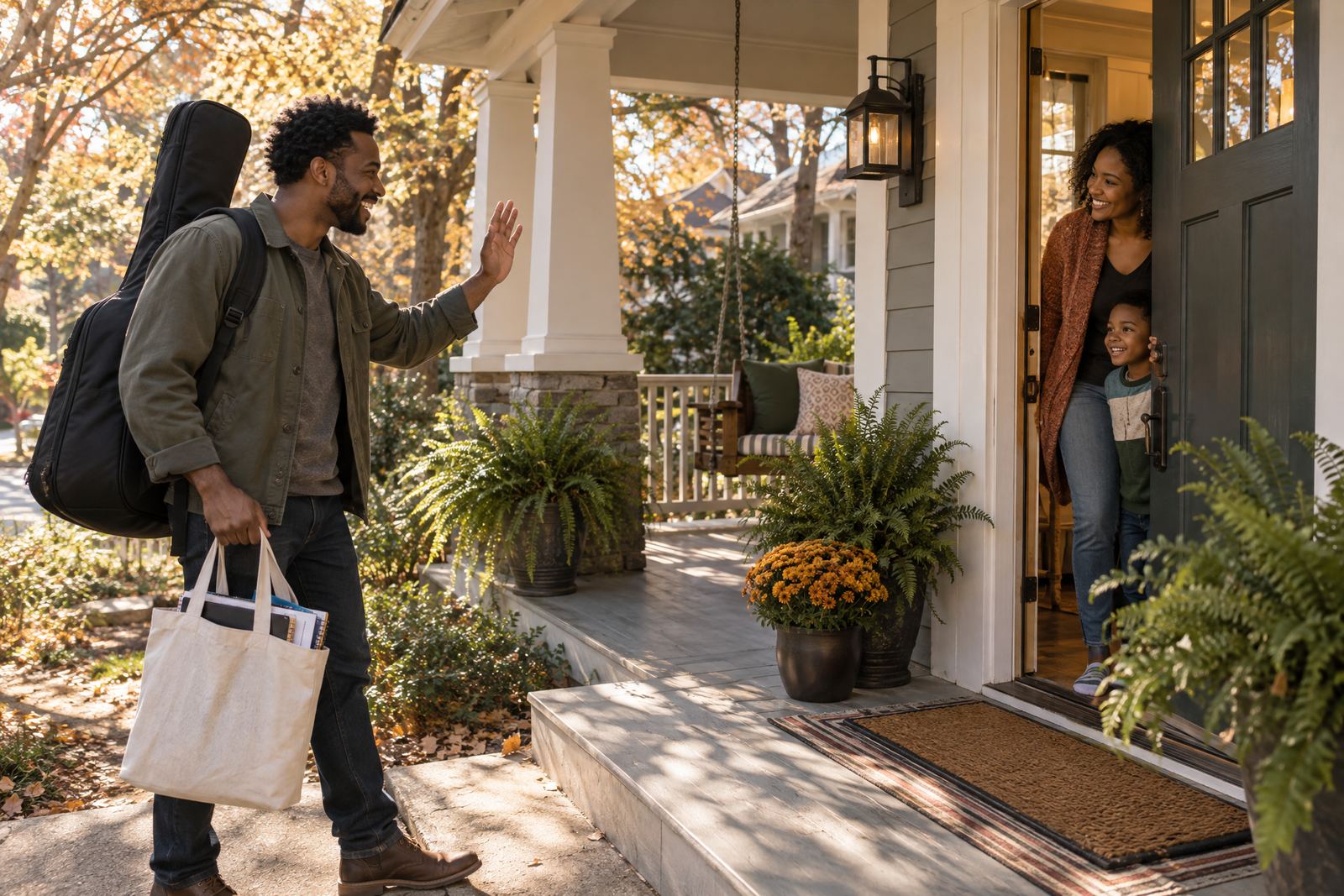
Short answer: your teacher arrives on time with their own instrument and materials, spends the first few minutes getting to know the student, gets them playing something real before the lesson ends, and leaves a short practice plan for the week. For a student under 18, a parent or guardian is home the whole time. Nothing about it should feel like a test.
Before the lesson
At Stage Pass, a coordinator talks with you about the student first: instrument, age, experience, the music they love, and anything that helps (a shy kid, a big audition coming up, a favorite artist). After you enroll, we introduce your teacher by text and email with a short bio. The first lesson is usually within a week.
What to have ready
- The instrument. Whatever your student will practice on. Don't buy anything big before the first lesson; your teacher will check what you have and tell you honestly if it's helping or holding your student back.
- A chair or bench at a comfortable height, and a music stand if you have one.
- A quiet room with the TV off and phones put away.
- A pencil and a notebook or folder for the practice plan.
By instrument
- Piano: a digital piano with 88 weighted keys and a sustain pedal, or an acoustic piano that has been tuned recently.
- Guitar: any playable guitar. For electric, a small amp and a cable.
- Voice: nothing to buy. A water bottle, and a keyboard or a piano app helps.
- Drums: sticks, a practice pad and hearing protection are enough to start.
- Violin: a violin sized to your child's arm (renting is the usual first step), rosin and a shoulder rest.
Where to set up
Choose a shared, open room like the living room, den or dining room, with the door open. A finished basement works well for drums or an amp as long as an adult is home. Your teacher can adjust the bench height, the music stand and the light at the first lesson.
How the first lesson usually runs
Every teacher has their own way, but a first 30-minute lesson for a beginner often looks like this:
- Hello and questions. What music does the student like? What have they tried? What do they want to play?
- The instrument. Size, setup, posture, how to hold it.
- Playing something real. A first chord, a beat, a short pattern with both hands, a clear sound on the open strings, a song in a key that fits.
- The plan. One or two things to practice this week, written down, plus a few minutes with the parent.
Students who already play usually play something first, so the teacher can hear where they really are, then leave with two or three specific things to work on.
What parents do
Be home for the whole lesson. You don't need to be in the room; many parents listen from the kitchen, and you're always welcome to sit in. At the end, your teacher will fill you in on what to practice. At Stage Pass you'll also get a short written note after every lesson.
After the first lesson
Same time next week, with the same teacher. In between, aim for short practice most days rather than one long session (see how long kids should practice). If the first lesson after you enroll isn't a great fit, tell us within 48 hours: our First Lesson Guarantee rematches you with a different teacher at no charge or refunds what you paid.
Want to compare settings first? Read in-home vs. studio vs. online lessons, or see how in-home lessons work in Atlanta and the towns we come to.
Common questions
What if my child is nervous about the first lesson?
That's normal, and a good teacher plans for it. The first minutes are a conversation, then something easy and fun to play. Shy kids often relax faster at home, on their own turf, with one patient adult. Tell us about your child when you sign up so we match accordingly.
Do we need to buy an instrument before the first lesson?
Not usually. For drums, sticks and a pad are enough; for voice, nothing at all. If you have an instrument at home, start with it. Your teacher will check it at the first lesson and help you choose or rent the right one if you need to.
How long is a first lesson?
The same length as your regular lessons. Most children under 9 do best with 30 minutes; older kids, teens and adult beginners usually take 45.