1. Home
  2. Lessons
  3. Banjo
Banjo lessons · Metro Atlanta

Scruggs rolls or clawhammer, taught by tab and by ear.

The right hand drives the banjo, so lessons start with steady rolls or the clawhammer stroke and build from there. Your teacher can meet you at home, at their studio, or online.

Ages 9 and up Home, studio or online Background-checked teachers
Banjo
Who it's for

Banjo lessons for every age.

Kids

Banjo suits kids around 9 and older, once their hands can fret the strings and they can manage the weight, which is why an open-back banjo is often the better first choice. Young players start with simple rolls and familiar tunes, so they hear real banjo music coming out of their own hands early on.

Lessons for kids

Teens

Teens drawn to bluegrass and Americana learn the rolls, licks and breaks that let them hold their own at a jam. Lessons cover tab, playing by ear and backing up a singer, and they can head toward melodic style or folk-rock if that's the sound they're after.

Lessons for teens

Adults

Banjo draws a lot of adult beginners, often guitarists or folk fans who finally want the instrument for themselves. Lessons run from your first roll to holding your own at a bluegrass or old-time jam, a tradition with deep Georgia roots: some of the earliest country and old-time string band records were made right here in Atlanta in the 1920s.

Lessons for adults
What you'll learn

A clear path, at your pace.

Every student gets goals and a weekly practice plan. Here's roughly how banjo lessons progress. Your teacher adjusts it to you.

Level 1

Getting started

  • Open G tuning, fingerpicks and picking-hand position
  • Forward, backward and alternating rolls, or the basic clawhammer stroke
  • Reading banjo tab and your first chords
  • First tunes like "Cripple Creek" and "Boil Them Cabbage Down"
Level 2

Building up

  • Slides, hammer-ons and pull-offs
  • Playing a break over a bluegrass tune
  • Backing up a singer and vamping chords up the neck
  • Drop-thumb and old-time tunes for clawhammer players
Level 3

Advanced & pro

  • Up-the-neck licks and Scruggs-style breaks
  • Melodic and single-string styles
  • Learning tunes by ear at jam speed
  • Playing with a band, at jams and on stage

Styles we teach

BluegrassOld-timeClawhammerScruggs styleMelodic styleFolkAmericanaCountryCeltic (tenor banjo)Dixieland (tenor & plectrum)
Your first lesson

What to expect.

Your teacher tunes the banjo to open G, sets up your picks or your clawhammer hand, and gets a steady roll or bum-ditty going. By the end of the lesson you'll play the bones of a real tune. Experienced players get help with timing, tone and speed, plus a plan for jamming with other people.

What you need

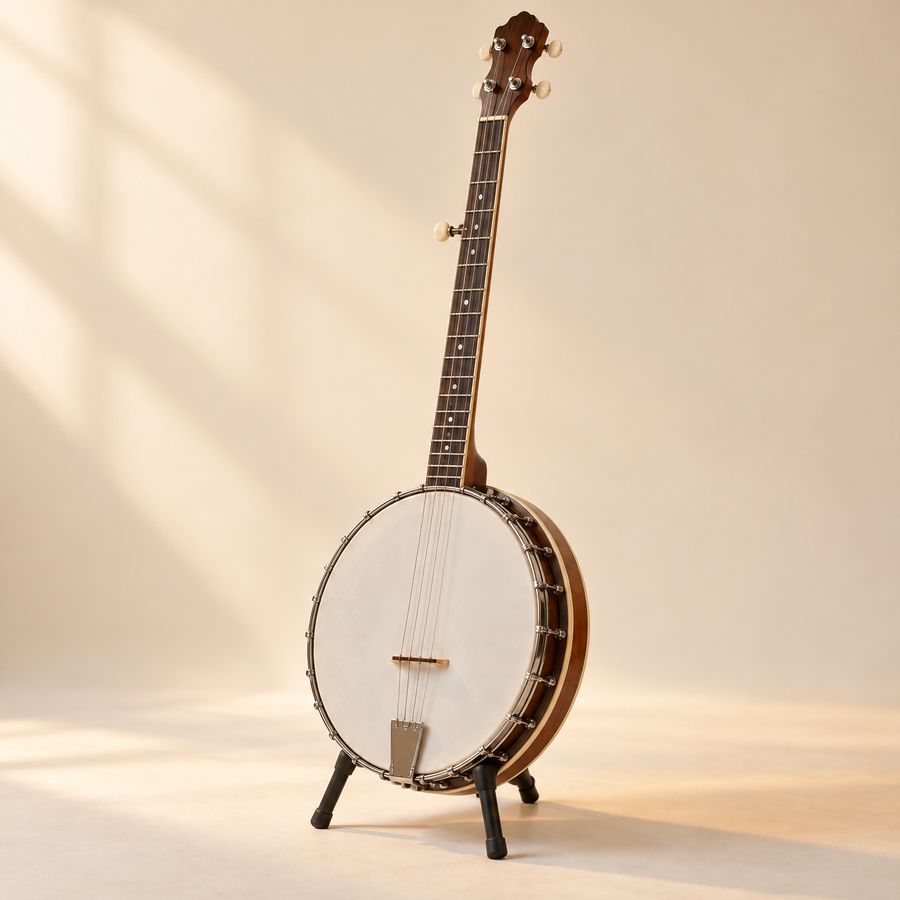
A five-string banjo is the standard. Resonator banjos are louder and carry the bluegrass sound; open-back banjos are lighter and the classic choice for clawhammer. Three-finger players need a thumb pick and finger picks, and everyone needs a clip-on tuner and a strap. Setup matters a lot on banjo, so let your teacher look yours over, and talk to us before buying.

Love your first lesson, or your money back.

If the first lesson with your teacher isn't a great fit, tell us within 48 hours. We'll rematch you with a different teacher at no charge, or refund everything you've paid. Your choice. Your teacher still gets paid for their time; we cover it. That's how sure we are about who we send you.

Every banjo teacher on our roster

  • Plays and teaches professionallyA working musician with real teaching experience.
  • Auditioned by Alex + an observed demo lessonWe see them teach before they teach you.
  • Background-checkedCriminal and sex-offender registry checks before a first lesson.
Three ways to learn

Your place, theirs, or online.

Pick what fits your week. You can change it any time, and many families mix all three.

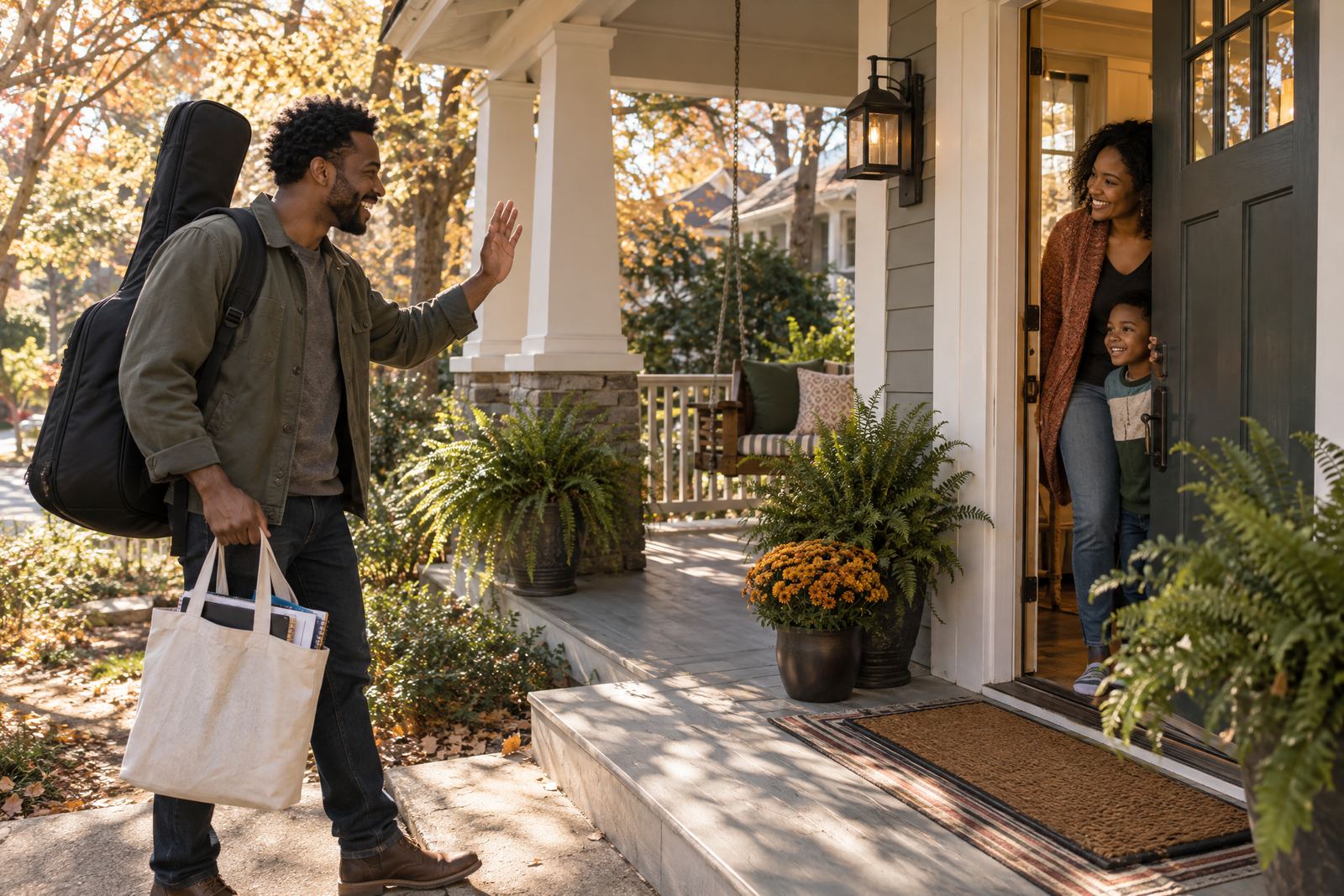
Music teacher arriving at a family's front door with a guitar case
Most popular

In your home

Your teacher comes to you, same day and time each week. No drive, no waiting room, no car-line shuffle. Kids learn on the instrument they actually practice on.

  • Perimeter, North Fulton & East Cobb now; Intown opening
  • A parent or guardian home for students under 18
  • From $55 per 30-minute lesson
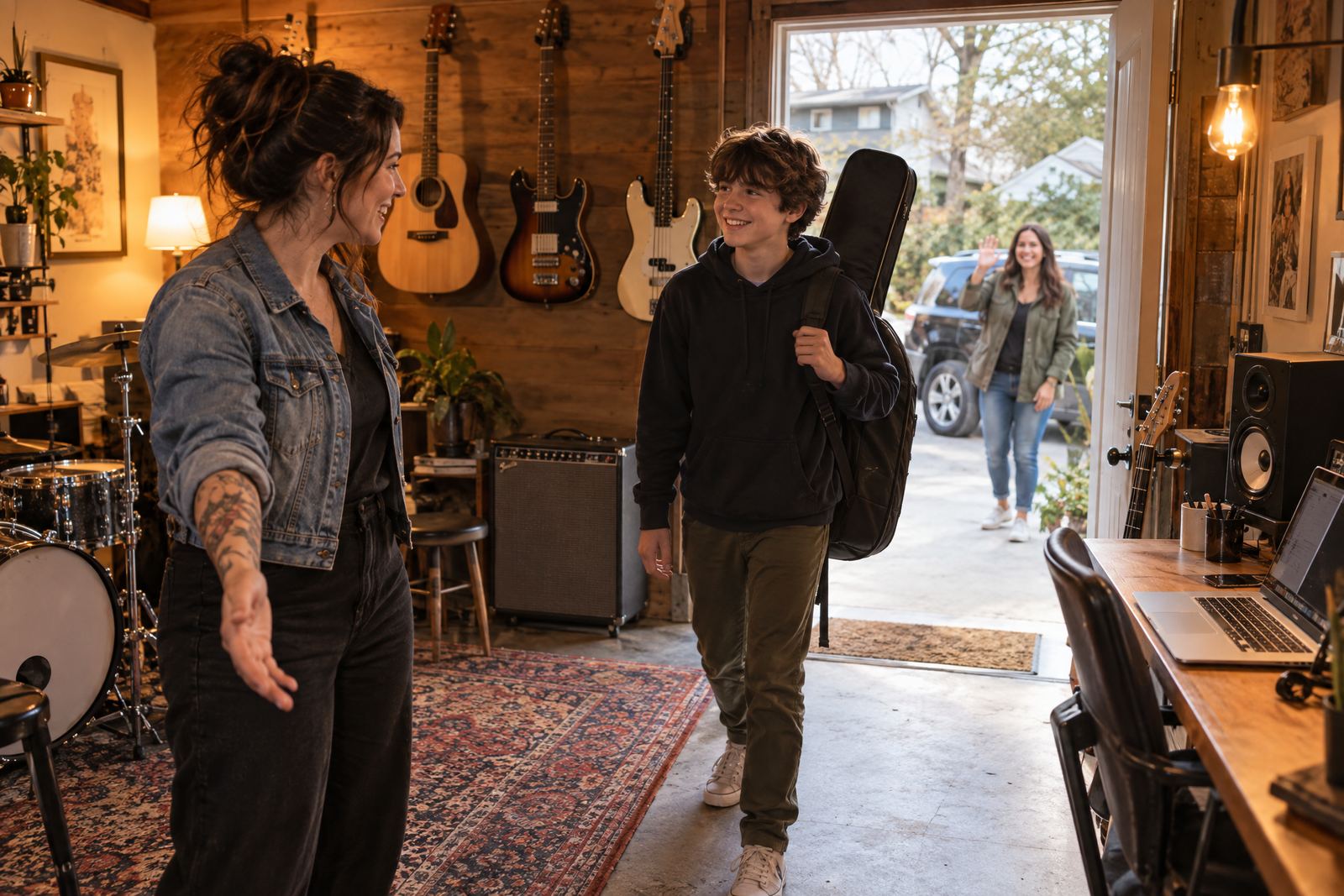
Student arriving at a teacher's home recording studio
Great value

At your teacher's studio

Learn in a real working musician's space: their instruments, their recording setup, a room built for music. A great fit for drums, advanced players and anyone who likes a change of scene.

  • Teacher studios across the metro, ITP and OTP
  • Pro gear and recording tools on hand
  • From $50 per 30-minute lesson
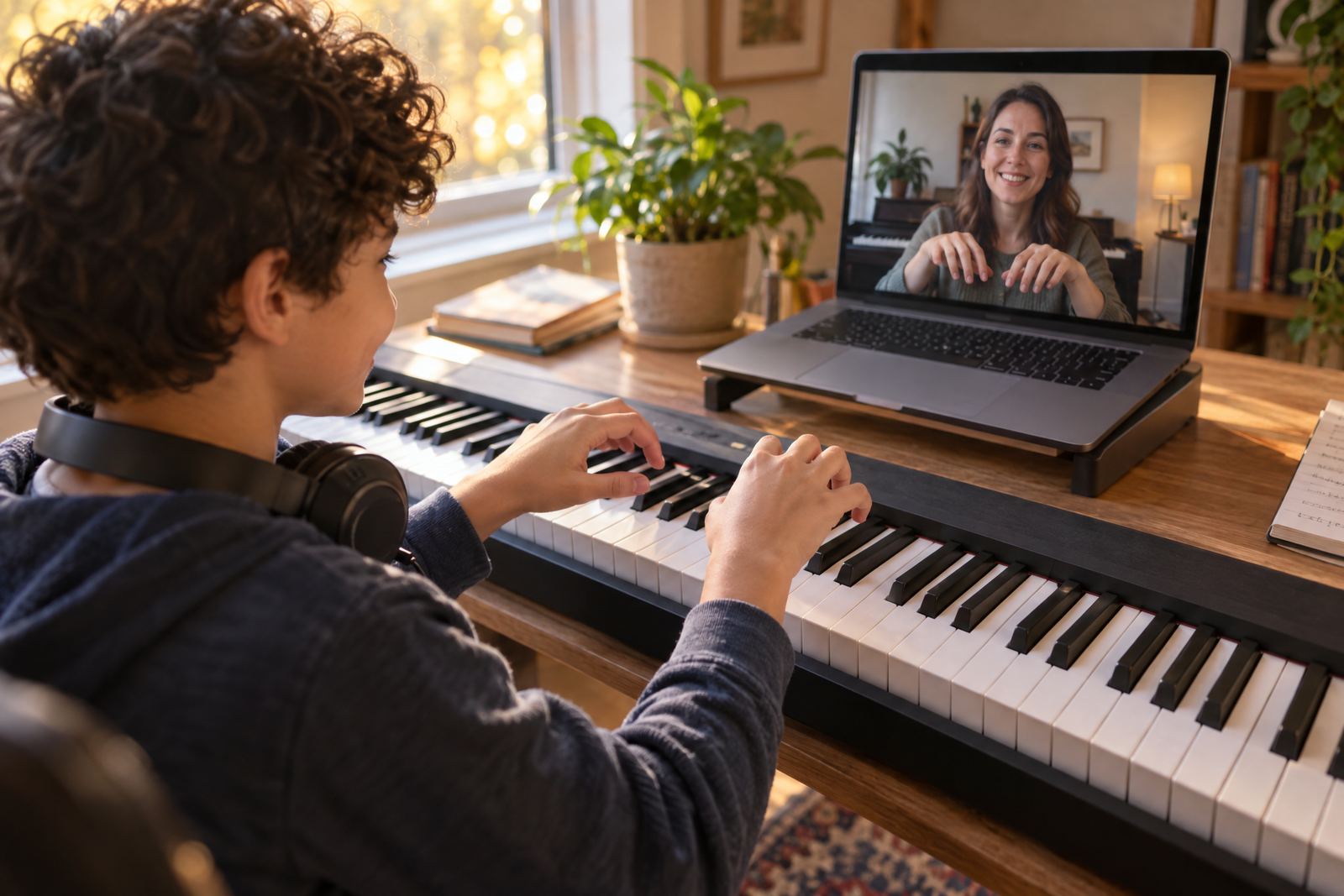
Boy taking a live online piano lesson on a laptop
Anywhere

Online, live

The same teacher, live on video. Perfect for busy weeks, travel, sick days and families outside our in-home area. Many students mix online with in-person.

  • Live one-on-one, never pre-recorded
  • Switch between online and in-person
  • From $45 per 30-minute lesson
Questions

Banjo lesson questions.

Pairs well with

Should I learn bluegrass or clawhammer?

Bluegrass three-finger picking is bright, fast and drives a band; clawhammer is rhythmic and earthy, and it's the heart of old-time music. Listen to both and follow your ear. Many players learn one first and pick up the other later.

Do I need to read music to learn banjo?

No. Banjo is mostly taught with tab and by ear, which is how the tradition has always worked. Your teacher will teach both, so you can learn from books and from other players at a jam.

Is banjo hard to learn?

The first rolls feel awkward for a week or two, then they click. After that, banjo progress is steady and easy to hear, and many students are playing simple tunes within their first couple of months.

What kind of banjo is right for a child?

Full-size resonator banjos can be heavy for kids. An open-back banjo or a shorter-scale model is easier to hold and still sounds great. Your teacher can help you choose before you buy or rent.

Can I learn banjo if I already play guitar?

Yes, and you'll have a head start with chords and fretting. The new part is the picking hand: rolls or clawhammer take time to feel natural. Your teacher will focus there and use what you already know to speed up the rest.

Find your banjo teacher.

Tell us who's learning and what they want to play. A coordinator will call within one business day with a teacher in mind.

Find my banjo teacher